As part of the IRUD Laboratory’s integration with teaching, International Relations students actively participate in Student Group Discussions (SGD) focusing on themes of transnational collaboration and international crimes. These discussions foster critical thinking and collaborative research on complex global issues in 2025. Currently, two student teams are conducting final projects closely related to maritime studies and transnational crime, exploring topics such as illegal fishing, human trafficking, and maritime security cooperation. These initiatives reflect the department’s commitment to applied learning and addressing real-world challenges through academic inquiry.
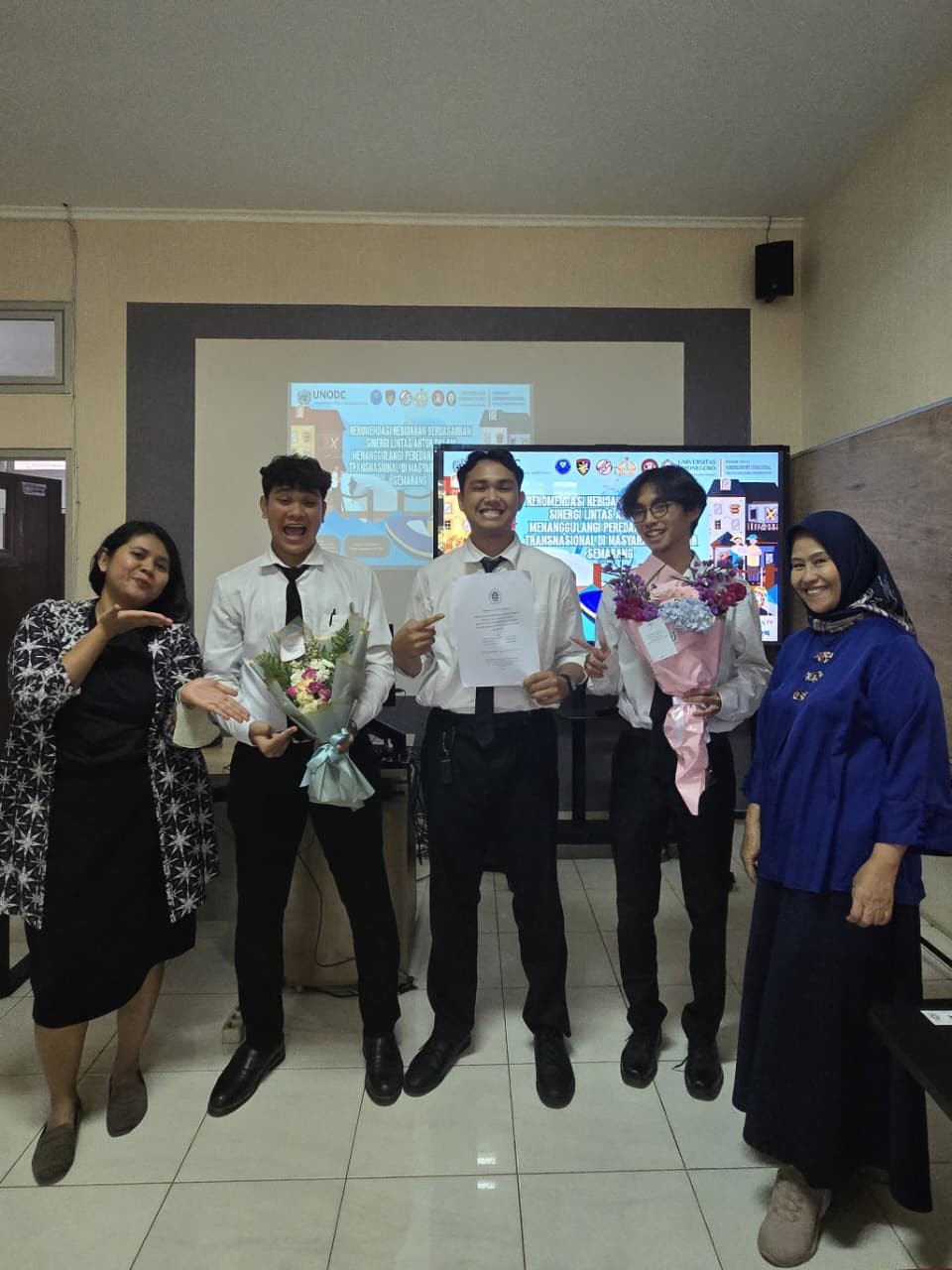
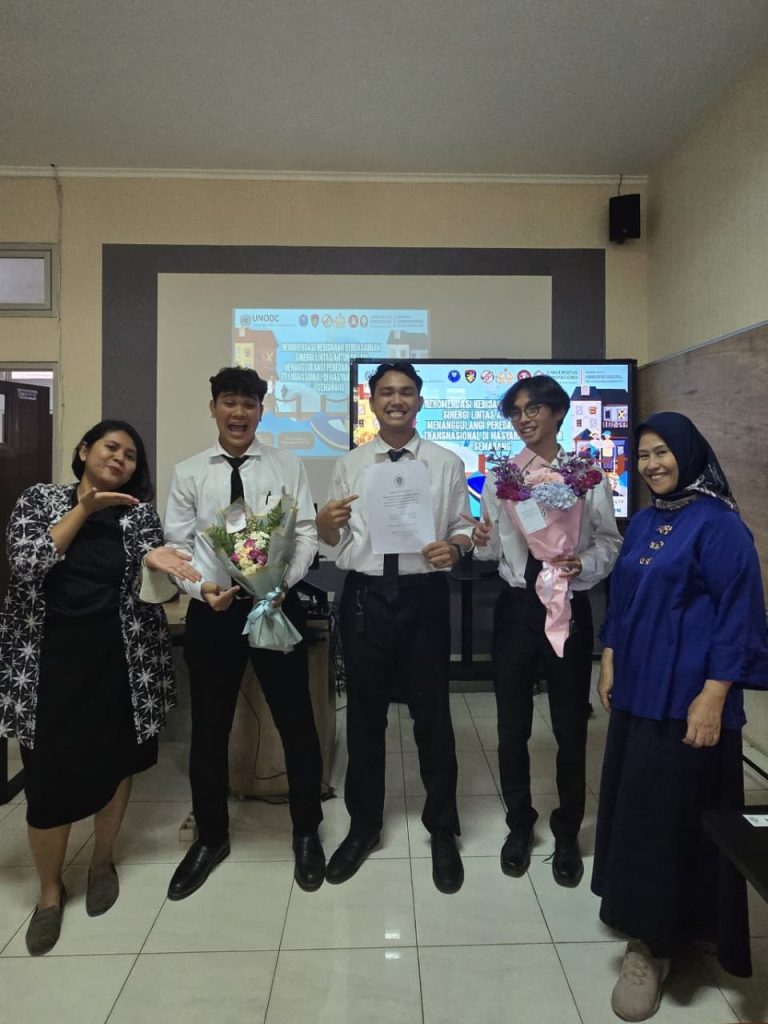
“Tutup Celah Putus Jaringan” (Close the Gaps, Cut the Network) is a student project by the International Relations Department of Diponegoro University, focusing on efforts to combat transnational drug trafficking through maritime routes in Semarang. The research emphasizes the importance of cross-institutional synergy involving the Central Java National Narcotics Agency (BNNP), the Indonesian Navy, Bakamla, Polairud, and Customs to strengthen maritime surveillance often exploited by drug syndicates. Drawing on the theory of multitrack diplomacy and the concept of information sharing, this project links international cooperation with the dynamics of transnational organized crime to formulate more inclusive strategies.
As a concrete outcome, the team introduced the BERDIKARI (Bersama Didik dan Cegah Narkoba Sejak Dini / Educate and Prevent Drugs Early Together) program through interactive workshops in the coastal area of Tambak Lorok, as well as D.A.R.E. to Talk (Drug Awareness and Responsibility Education), a digital discussion forum featuring former users, activists, and law enforcement. Collaboration was also expanded with the local NGO Care and Aware (CnA), which focuses on drug issues, making the community-based approach more participatory.
The program primarily targets coastal communities, especially the younger generation, to increase awareness and resilience against drug threats. Conducted from October to December 2025, the initiative combines community education, inter-agency collaboration, NGO involvement, and digital campaigns. Through these steps, “Tutup Celah Putus Jaringan” is expected to strengthen the social resilience of coastal communities and sustainably restrict the operational space of drug networks.